Showing posts with label Original Content. Show all posts

Sunday, September 07, 2014

Quick Review - Banished

If you think you're good at management sims, you should step up and try Banished. It will humble you. Unless you do everything right and provide for about 17 different needs for all your people at all times without fail or delay, people are going to die. A lot of people. The game's resource generation vs consumption is incredibly tilted against you. Unless you have fully educated villagers using the best tools and wearing the warmest clothing and in exactly just the right amount of houses (not too few, not too many), it's a long slow slide into starvation and desperation. My village has been going about 43 years, but because villagers apparently age at 4 times the normal rate (I started off with 10 villagers in their 20s, and within 5 years the oldest ones in the village were in their 40s easy) there have been generations of turnover, especially due to all the starvation. You can't farm enough. You can't forage enough. You can't mine enough, you can't quarry or herd or smith or log enough, fast enough. At my peak, my village boasted almost 100 residents. After about a 20 year recession that worsened into depression (not helped by the frequently completely useless merchants that came to call, no I don't want to buy your stupid pumpkin seeds, I already grow my own, why the hell didn't you bring iron), I'm back under 30 residents, mostly from starvation.

The game plays very similar to Tropico or Gnomoria in that instead of controlling individual villagers you simply order the places for them to live and work built, and manage as a taskmaster/city planner. It starts off kind of easy because a new map will have abundant resources just lying on the ground around you... but once you use that up, it's much slower and more expensive to mine it/cultivate it/quarry it. There are no goblin attacks, no rebels, no hurricanes or zombies... just your silent mental wail as you watch people under your charge wither and die because your skills at management were a single iota less than divinely perfect.

Read Full Article

Sunday, April 13, 2014

Gas Bandit Hates Your Mech: Part 2

Welcome back, ladies and germs, to part two of my insulting your favorite 50 meter K'nex set.  It's Gas Bandit Hates Your Mech, Parte the Seconde!

Read Full Article

Wednesday, April 02, 2014

Gas Bandit Hates Your Mech, Part 1 of 2

This one's going out to all my Mechwarrior Online buddies.


Hello, you disgusting mutant pimple!  I'm the Gas Bandit, and we've only just met, but I hate you. More than that, I hate your mech.  Why?  SO GLAD YOU ASKED.  Let me go down the list of mechs I hate.


Read Full Article

Monday, March 18, 2013

Review: Ace of Spades

Ace of Spades is an indie first person shooter that combines the team/class shooter mechanic of Team Fortress with the voxel-based world of buildable/destroyable blocks of Minecraft.

Read Full Article

Wednesday, October 31, 2012

Review: FTL

FTL: Faster Than Light
FTL (Faster Than Light) is an indie Sci Fi game available on Steam.  A prototypical kickstarter game, it shows how more and more low budget titles are now successfully making their way to market, completely ignoring the old AAA megapublisher paradigm, and the computer gaming world is better for it, in my opinion.  This game really demonstrates what happens when it all comes together.

The premise of FTL is that you control a ship and crew carrying vital intelligence out of enemy territory back to your fleet, and the enemy "Rebel" fleet is dogging your heels every step of the way.  Over the course of your flight to safety, you must fight, trade, investigate, recruit and befriend your way across the galaxy as the challenges you face grow steadily more difficult. 

This being an indie title, it's not surprising that the graphics are a throwback to earlier times - though for what they are, they are very clean, smooth and well implemented, making it feel more of an artistic choice than a limitation of talent, budget, or tech.  The sound and music is also quite retro-future in feel, reminding me in some ways of Star Control 2.  Again, they add to the experience rather than date it. 

The game really brings together some well thought out ideas and puts them together into a very engaging game.  There's a management sim with RPG elements in that you can purchase upgrades to your ship, and some systems function more effectively with crew manning them, and crew members improve in their ability to run said systems with practice.  For example, having someone man the engineering station makes your ship dodge better and able to FTL jump sooner, and the more practice that crewmember has manning that station, the better those bonuses get.  Most of the time, your wants will naturally far outstrip your limited cash resources, so you'll have to pick and choose what upgrades you take, and even then you might not have the cash to upgrade your reactor to provide power to everything all the time, so you'll have to manage power distribution on the fly in real time (though you can always pause the game with space bar and issue orders while paused).  You also select targets for your weapons and time their firing, and you must send crew to repair hull breaches and damage systems (another thing they get better at with practice!), and you can even send and defend against boarding parties. 

Fighting a slug vessel.  Shields down. Ouchy.
The game might frustrate some people because it is actually very difficult, or gets there very quickly.  There are two game modes, and even on easy mode, winning is difficult.  On normal mode, it's rare I can get past stage 5, much less complete the game successfully.  A complete playthrough, however, only takes an hour or two, so losing is less horrible than one might think.  Personally, I do find it kind of refreshing to play a game you can lose at, in a video game market full of unlimited tries and infinite do-overs.  And the game can be brutal.  Your crew members are individuals with names and talents, but for them, death is permanent - there is no getting "knocked out" to be revived later after combat.  Really, the game is often called a "roguelike" but I find it has very little to do with Rogue style gameplay.   To me, it is much more akin to Oregon Trail - you have to balance risk versus reward in making decisions and overcoming obstacles, you have to manage the individuals in your party and any deaths are permanent, and really you expect to lose more than you win because the journey is that difficult. 

And even all that aside, there are some genuine gripes I have with the game, as no game is perfect.  Frankly, a bit more of the game is subject to simple random chance than I would have liked - the only deciding factor in the success of some endeavors such as navigating an asteroid field is down to the flip of a coin, or in happening to have the right systems equipped - which itself is also a flip of a coin or roll of the dice to determine if the game has even decided to grant you the opportunity to purchase said system.  So there comes a time when you hit the ceiling of what you can accomplish with skill and judgement, and the degree of success or failure of your mission is determined by how kind your computer's random number generator is feeling today.  Indeed, the game gives you the illusion of plotting your own course across each sector, it is merely just that - illusion.  The outcome of any path you choose is largely random, so there's almost no point in there being a choice at all, other than to decide whether or not you go through nebulas.  Also, while the short nature of the game helps soften the blow of losing, and the random nature of events helps replayability, it would have been nice to also have an alternate, longer sandbox or campaign mode to play in - something akin to the old Starflight or Star Control games. 

But, those things notwithstanding, it's still an excellent game and a steal at ten bucks.  I know I often say you could do a lot worse for a lot more money, but it's true - and you also get the bonus of the smug sense of self satisfaction that you are supporting "indie" gaming and sticking it to the big fat cat publishers who continue to rake it in while they ruin games you love (cough*EA*cough) or dispense the same sequelitis year after year. 

Final Verdict: A solid A. Don't miss it.


Read Full Article

Wednesday, August 22, 2012

Gas Bandit's Handy Tips for the Technologically Lazy

So your wireless router is starting to flake out on the wireless part, but the computers connected by cables are still able to get their connection perfectly, and you've got a bajillion forwarded ports set up that you're really not looking forward to typing in on the new router you have to get?

Here's a handy tip from me - find the setting in your new router that says "DHCP SERVER - ENABLE/DISABLE." Flip it to "Disabled," change it's LAN address to be in the same 192.168.THIS NUMBER.whatever IP range and plug one of the LAN ports (not the WAN port) into one of the LAN ports on the old router. Voila, your new wireless router is just an access point for your existing network and you can put off doing the actual work of setting up your new router until the old one absolutely dies completely, taking its settings with it, making it 10 times as inconvenient to remember and enter in all that information to the new router!

Hrm, I'm starting to think maybe this isn't such a great idea.

Ehhhhhh whatever.

http://hosiplan.com/memes/faces/fuck-that.jpg

Read Full Article

Monday, July 09, 2012

Review: DC Universe Online

Really, with it being free to play on Steam, there's no reason NOT to check out DCUO, but in case you were wondering what you're in for while you wait for the 18 whopping gigs of the client to download, here's a heads up.

DC Universe Online is, obviously, a superhero/villain MMORPG. However, unlike Champions Online, it does not feel like a "City of Heroes" clone. It does a good number of things different (some for the better, some not so much). Combat has an entirely different "flow" to it, character building and customization is completely different as is stat and item handling, and of course, it includes years of technological and gaming paradigm advances.

Combat has a much more "actiony" feel to it. The game has been described as very "X-Box controller-friendly" and I'd be inclined to agree. It works fine with mouse and keyboard but several factors indicate a controller might be a more convenient input device. There's no mouse cursor except when you open a menu. Instead there is a targeting reticle, and whatever last was in that reticle is retained as your target until you target something else in the same manner or your target goes offscreen. You can also "lock" your current target to make sure you don't switch or lose it. Attacks feel very diablo-ish in that it's pretty much "one click = 1 attack," as opposed to the old cliche of picking a target and turning on autoattack. Additionally, the types of attacks you do depend upon the "types" of clicks you enter, and often build combos based on successive moves, on top of the more conventional "1-8" ability hotkeys. This does very well at keeping combat fresh and interesting, but it also can lead to sore fingers and perhaps increased button wear. I can't be the only one who's worn out a mouse button here.

DCUO also incorporates a slightly more RPG-standard inventory system. You get money and loot drops from defeated foes and as rewards for completing missions. The gear you wear affects your stats and has a direct effect on your capabilites. Ordinarily I'm not a fan of games that define your effectiveness entirely by what gear you have, but this is mitigated somewhat from the fact that I've very rarely actually felt "underpowered." Oh, I don't agree with every design decision in this - I think it's appalling that they have two different stats for mitigating incoming damage that are separate for NPCs (called "defense") and enemy players (called "toughness"). That's a huge black mark in my opinion, necessitating a "pvp" suit and a "pve" suit of gear with no convenient way to switch back and forth between them with a hotkey.

But let me tell you something they did very right with gear: Styles. Every piece of gear's appearance is called a "style." For instance, you could have a pair of gloves that are "biker" style. You like how that looks? Putting them on unlocks that style for you forever, and setting your appearance with styles is a separate tab from the inventory. Thus, you do not have to give up a "look" you like when you get gear with better stats that doesn't match. I also like that the game only starts you off with a dozen or so basic costume options and then uses finding gear as a way for you to not only increase your character's power but also to build a wardrobe. Sure, there are also even MORE "styles" you can unlock by paying real world money in the game's marketplace, but hey, a free-to-play MMO has to make its money somewhere, and cosmetic upgrades are a good place to do that. Thus, you have a character appearance customization scheme which rivals City of Heroes without the drawback of getting everything at level 1 and having nothing else to strive for aesthetically.

Some people might think I'm crazy for saying that, but to me, that's the whole point of an MMO - you want to work to make your character better. To me, starting with every costume option now seems like starting at the max level. Sure it's fun right away, but it has no staying power, no accomplishment. Unlocking costume pieces also distinguishes players from each other - fancier costumes show more advanced characters at a glance, usually... though the game has the same problem COH and the like suffered, with plenty of "hero" types running around in black-on-black color schemes with spikes and chains and batwings and such with names like "DarkLordMurderDeathDemonGuy." Yeah, I'm sure the Justice League would love to have THAT hero on the watchtower. WHY didn't you roll villain again? I mean, you'd fit in there.

Another innovative concept the game adds is that the game lets you switch in and out of your archetype's "role" starting at level 10. Everybody starts off a DPS class, but at level 10, your power type gives you a roll you can switch into at any time - Tank, Healer, Controller. These roles don't do as much damage as your default "Damage" mode, but your abilities get extra effects that make you more group friendly (such as healing/ability power regeneration, better CC, better damage mitigation, etc). Thus, every character both has the ability to solo and the ability to contribute meaningfully to a group.

There are some parts that rub me the wrong way, however.

First off, you start off by making a character and picking a "power" and a "weapon." These two aspects are completely independent of each other. The first character I rolled had "mind" powers and dual pistols for weapons. It just struck me when I was rolling... why does a mind controlling telekinetic need guns? It may have no "story" reason but the pragmatic, in-game reason is that your "powers" chew up your blue bar really fast. You'll get 4, maaaybe 5 powers off before you're completely empty. That's enough to take out 2 or so common mook level adversaries, or perhaps bring a same-level player to half (if he doesn't drink a health potion). So, you will rely on your weapons for a great deal of your damage. That aforementioned TK/guns villain I made had his best results by using his "powers" sparingly as interrupts and crowd control while doing most of his attacking with his guns. Yank a guy in the air, shoot him a few times, repeat.

Which brings me to another part of the game I can't decide if I like or not - everything is all about stunlocking. Almost every attack, in every power line and every weapon specialization, comes with some kind of stun, or knockdown, or sleep effect, or entrapment of some kind. If you don't screw up the button mashing, you can potentially keep a target from being able to fight back at all, which in PVP (at least at the lower levels) often leads to whoever attacks first winning. But you can "break" out of being stunned and whatnot by hitting shift, the block key. If you release it and press it, you can shake off the effect, and have a chance to counterattack and turn the tables so the OTHER guy is now being juggled, but this doesn't have the best success rate. Most often it's somebody flubbing a mouseclick combination that changes the momentum of the fight, in my experience. There's also a dynamic having to do with blocking - some attacks will be blocked, other attacks break block but are interruptible. It feeds into the "actiony" combat I was talking about earlier. That's all very well and good but let's remember we're playing an MMO here - high latency is the rule rather than the exception. There may not be time to react to what's going on in a fight in that matter. It's less the case in PvE fights against bosses who tend to telegraph their attacks, but in PVP it adds a great deal of randomness.

The game uses the Unreal 3 engine, with all the good and bad that entails. That means the models are detailed and framerate performance is pretty darn good (I get better framerates in DCUO than I do in City of Heroes on the same rig, despite DCUO being much more detailed/higher polygon count). However, the game suffers the texture problems most Unreal 3 games suffer - blurry, low res smudges in place of textures for 5 seconds, replaced by slightly less blurry textures for 5 seconds thereafter, until finally the proper high res texture loads in. I think the "level of detail" threshold (how far an object has to be from you before it is replaced by a lower polygon version, or disappears entirely) is a smidge on the close side, and unfortunately there is no slider to adjust this in the options.

The game uses built in VOIP in groups but only once have I ever had somebody besides me use it. But it's saved my bacon to be able to say "incoming hero behind!" while fighting instead of having to type it, and have the others in my group hear me.

The game also goes heavy on the polish. There's a lot of voice acting, your mentors and questgivers' faces appear and animate on your screen's "communicator" to talk to you, effects are neat, the sound is good, and the soundtrack is very well done as well. My one nitpick is they got the wrong person (in Gina Torres, of Firefly) to voice Wonder Woman. It sounds more like Amanda Waller (the big mean government lady from Cadmus in the DCAU, remember?) attempting to do a humorous impression of wonder woman. But they got Kevin Conroy to voice Batman and Mark Hamill to voice Joker (and Arleen Sorkin to be Harley Quinn!), so even though they got a Baldwin to be Superman, we can let all that slide.

And, unlike previous games which, due to not being licensed or paying royalties, discouraged you from making your own lookalike of an established DC comic hero, this game not only makes it possible, not only encourages it, but some of the best loot is directly labeled as "Supergirl's Boots" and such and give you the style option to look exactly like them. There are plenty of Superman, Batman and Joker-alikes out there doing their things. So, if that's a plus for you, go for it.

There's also an option I find humorous - an option to not display all other non-hostile players. I haven't turned it on, myself, but I find it amusing that they thought to give you a box to check in your MMO when you want everybody else to go away. I wonder if you just see NPCs falling over for no reason. They should call it "Solipsistic mode."

So what's my final verdict? It's free to play, as I said, so there's nothing to lose in trying it out, and I dare say a lot of people (if they haven't already, I know it's almost 2 years old) already have. But even at this late stage, I'm sure many like me didn't bother to give it a look until it hit steam for free, and I'd bet a good number will find it worth paying money for - maybe not the full $15 subscription, but maybe a buck or two here and there for costume pieces and such. I've played many worse MMOs, and paid way more for the privilege. That said, I've also played better and it seems to lack content in the endgame so it won't be one of those games you play for years, and it won't be EVERYBODY's cup of tea to begin with.

Grade: B+ for a free to play, C as a subscription model.

Read Full Article

Tuesday, May 29, 2012

Review: Moon Breakers

So I tried playing Moon Breakers, which is free on steam. I dusted off (literally, it was covered in dust from disuse since I stopped playing Wings of Prey) my joystick and plugged it in, then fired it up. Well, I should have saved myself the trouble. It doesn't use joystick.

A flight simulator, that tries to insinuate itself as the spiritual successor to Wing Commander... has no joystick support.

Ok, leaving that aside... there are further annoyances. It is 100% online, but you can't arrange games with friends or even control the game type with your own lobby. The game shoves you into a lobby and picks your side and the type of game at random. There's no way to arrange to play as a team with friends, you're just stuck with 29 or so random internet asswipes every time. There's no single player, either, so there's no plot. The game is "There's the Government and the Pirates and they fight over H3! FIGHT!!"

There are basically 3 kinds of game: Team deathmatch, destroy the enemy carrier, or capture the flag. The game type is chosen at random or perhaps on a rotation, and if enough players click "veto" on it in the scant few seconds between the start of the lobby and the start of the game, it will change, but I never saw enough vetoes for it to happen. Then you pick your craft, and you're launched. Every game has a 15 minute time limit, so often the game will end just as things are really starting to get good.

There are many craft available to fly, and by available to fly, I mean available for purchase. Oh sure, you can earn enough points eventually to unlock a ship without paying for it, but... well, the cheapest ship I saw was 160,000 points (or "cred" as they call it)... and on average I'd say I got about 2-4 thousand points per match (and I saw plenty of poor suckers who made less than a thousand every round). I don't see how I could possibly ever play 40-80 or more rounds of this game without going insane. And that's for one of the more modestly priced fighters - I saw some big badass ones for over a million cred. Compare that to League of Legends, a true free-to-play success story, where you could conceivably unlock a new character (granted, a cheap one) after 5 or so games, depending on performance.

Anyway, the ships are separated into light, medium, heavy fighers and bombers. Light fighters are agile and fast, but lightly armed and armored. They don't do a lot of damage and can't take a lot of damage, but in the hands of a skilled player can jink enough to survive. Medium and heavy fighters trade maneuverability for firepower and armor. You can take more hits but it's harder to dodge... and dodging is often a better defense if you've got more than one attacker on you. Bombers are the slowest of the bunch, and only have moderate offensive capability versus fighters, but they carry torpedoes which are the only weapons that can do damage to enemy carriers. The torpedoes require time to arm after firing, so you can't fire point blank, and travel slow enough to be shot down by fighters and/or turrets on the carrier itself.

Let's get some praise out of the way - the game looks sharp, and it can be pretty entertaining. While I lament lack of joystick support, flying by mouse is pretty easy and intuitive. Ships are good looking, and asteroids and broken moons are both pretty and functional as there were many times I shook an attacker by darting around a huge chunk of rock or zipping through a tunnel. There are some definite echoes of Crimson Skies here.  I especially liked the torpedo paradigm - them being able to be shot down and relatively slow moving definitely adds to the experience because it gives light fighters a defensive role and means teamwork is still essential to attack a carrier because the turrets need to be destroyed or at least distracted by other targets, as do any fighters on defense. I also have to say the game had pretty much no latency-based problems that I could tell, and I ran into no bugs at all while playing it. That's impressive. And the voice acting in the background is a nice touch and actually sounds natural and in context - something else you don't always get these days.

Unfortunately, the aforementioned lack of control over game lobbies is not my only gripe with the game. And the lack of joystick support. The instrument panel is nice and easy to read, but it needs a radar. Little arrows with names around the edge of the screen do not suffice - I need operational awareness in under 9 square inches. Also, more cues about things like torpedoes headed for your carrier would be nice - for instance, it could be a feature of light fighters that they automatically track and draw attention to enemy torpedoes in the HUD. The missiles carried by fighters always seem to dumbfire no matter what I do (I don't even know if they are SUPPOSED to lock on and track, there's practically no documentation on this at all). The afterburner reservoir seems to be a little on the small side... and yes, I know SPACE FLIGHT DOES NOT WORK THAT WAY but it's a game mechanic I can respect - a limited burst of speed to be used sparingly. But I still think it could be a little less miserly with the boost juice. I am highly aggravated that the targeting reticle for anyone I do damage too changes from red (enemy) to grey. I realize they're trying to go for a way to differentiate who you're attacking with a kind of automatic target flagging, but white/grey is the WRONG COLOR for that. Maybe a brighter shade of red or flashing red and orange or something... other games have hardwired my brain to equate a grey target with one that can be ignored... and indeed, against all that space-rock backdrop, sometimes it's all too easy to lose track of grey text. Most of all, I find myself irritated by the blatant "pay to win" business model the game employs - people who spend real money to buy the better fighters are at a distinct and immense advantage over those who stay free to play - to the point where really, the only pragmatic purpose the "free to play" players have is to be the legion of mooks the paying customers blow out of the stars by the dozen. Other free to play games (such as League of Legends or Team Fortress 2) take special care to balance what you can buy against the default, but this game clearly does not.

All in all, I don't find this game to be worth my time. Sure, it's free to play, but that comes off as an excuse for shortcomings rather than a genuine selling point. The gaming experience is shallow, the interface doesn't have a lot of thought behind it (indeed, some of the menus look like a website from the 90s... I AM AWARE OF WHAT MY WEBSITE LOOKS LIKE SPARE ME THE COMMENTS, PEANUT GALLERY). The inability to control your gaming experience with personalized lobbies and setup controls is a big minus (and of course, such lobbies would require bot support if you wanted to just play with a few friends).

Oh, and it needs joystick support, of course.

Grade: C minus. And that's the word from Bandit Camp.

.

Read Full Article

Thursday, May 05, 2011

Review: D-Link EBR-2310 wired router

We had a router die at work. It was an old D-Link DI-524 that was pretty dependable, if nothing special, and it served us well for over 6 years. Surprisingly, however, that model is no longer made or sold in the US, so we got its current replacement... the EBR-2310.

The D-Link EBR-2310 has a nice black and silver rounded rectangular form factor that fits well on shelves or wall mountings. The RJ45 jacks hold ethernet cables in a secure and yet convenient to unplug manner.

That's all I have nice to say about it.

20 minutes after setting up the router, it walked down the hall, going from office to office kicking every user in the nuts and then shooting them in the head with a .45 ACP one after another.

Ok, that's not true, but it would have been less of a pain in the ass than what it DID do. Namely, go autistic every time more than 2 users attempted to transfer anything more complicated than an ICMP ping at the same time. Namely, increase latency by at least 300ms on all traffic. Namely, bring our internet connection and all critical systems to their knees, crippling our email, audio streams, and other must-have activities. It literally took me a week huddled in a dark, hot server closet over an eerily glowing sniffer to figure out there was absolutely nothing on our network that should be causing our problems.

We just got an absolutely crap router is all. Kind of sad. D-Link was never exactly top shelf, but its latest generation of products (20 minutes research online revealed many other people with the same experience on the entire suite of d-link wired and wireless routers currently on the shelves) seem to simply not be up to the task of actually... routing traffic. Which is... you know... kind of what you buy a router FOR.

So, unless you're the kind of net admin who likes the feeling of a weed whacker shoved up their backside and cranked to full speed, I would recommend you avoid the EBR-2310. If you ARE that kind of admin, dear god for the love of all that is good and holy get some counseling.

Read Full Article

Thursday, April 21, 2011

Review: Words With Friends (Android)

Or as I like to call it- FORCE CLOSE: THE GAME.


The end.

Read Full Article

Saturday, September 11, 2010

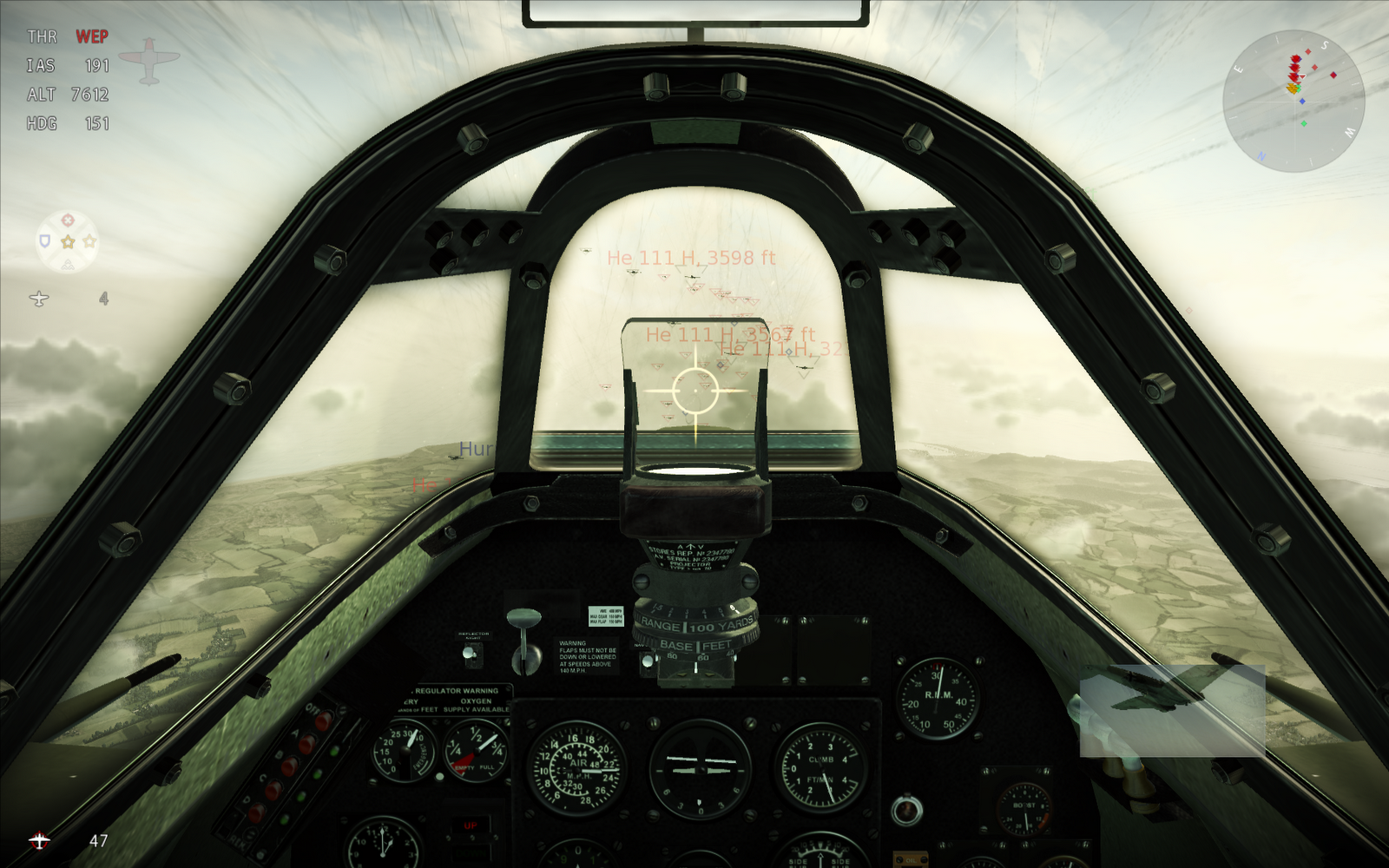
Review: Wings of Prey

I'd been jonesing for a good flight simulator for some time, practically ever since Chuck Yeager's Air Combat fell off the radar. Is Wings of Prey a good simulator? Well, it depends on two things: How much you like or dislike realism, and how important to you the between-mission fluff is in a game.

Wings of Prey is a technologically impressive WW2 flight simulator from Russian developer Gaijin Entertainment. And when I say it's a flight simulator, I mean it's a simulator. The ground, the sky, the planes, the water, the boats, even the cockpits are all very detailed and impressively rendered. Combining 3D rendering with high resolution textures and some very good postprocessing, WoP manages to convey a very immersive flying experience.

There are 3 settings to the game: Arcade, Realistic and Simulator. Arcade mode has lots of HUD "augmented reality" instrumentation like most games do these days, and on top of that it plays "physics nanny" to help keep you from smashing into the ground like a hefty bag full of beef stew. In arcade mode, the game is almost too easy... not much of a challenge at all.

But when you flip that switch to Realistic mode... hooo buddy.

Realistic mode still keeps the augmented reality targeting and instrumentation of arcade mode, but when it comes to flying, physics and damage, the training wheels are most definitely OFF. The phrase "punishingly realistic" kept coming to mind. And I'm not talking "100 different switches and buttons to pay attention to" realism like in Falcon 3.0 (for those of you who remember it back in the day), I mean in regards to physics, damage, and the scientific principles governing flight.

Never before have I played a flight simulator where I could stall simply by maneuvering. I don't mean "whoops I pointed straight up and now I have no speed" stalling like just about every flight sim, this is different. See, what makes an airplane generate lift is the uniform and rapid movement of air past the wings, the shape of which cause lift. In previous games, including my fondly remembered CYAC, I've never experienced a stall by rolling 90 degrees and pulling back on the stick all the way. That, I had been led to believe by every sim ever, was your standard way to turn.

How misinformed I have been.

The performance characteristics of your average WW2 fighter plane apparently are such that you can change your bearing faster than you can change your momentum - IE, if you start out facing north, roll to the right, and pull back on the stick, your nose will be facing southeast about the time your velocity will still be sending you northeast. This means that air is no longer rushing toward you from the front, but rather rushing "up" from "under" you... no longer generating lift, and pretty much guaranteeing you to go into a spin and start spiralling toward the ground. Assuming you can wrestle your way back to control (and you have to do it firmly but gently or it just gets worse), you'll still lose several hundred feet of altitude. Hopefully several hundred feet you had to spare, otherwise you're now an impromptu bonfire.

That's not the only way things "get real." As you take damage to your airplane, it suffers. Damage to your engine makes it harder to maintain airspeed. Damage to your wings (Actually visible in the form of real polygonal holes in them) makes them generate less lift and makes it harder for you to roll your airplane, thus making you easier to kill. And let me tell you, these planes don't take much to kill. I was under the impression (again from previous flight sims such as CYAC) that it took many seconds of sustained gunfire to shoot down a plane... such is not the case. A withering half-second barrage from most planes (especially those with large bore cannons) will start you streaking for the earth... and much more than that will cause such structural damage that a the wind might rip a wing right off you. Also, so many of these planes only carry so much ammo. I had no idea that the machine guns on an ME-262 could basically be exhausted by 10 seconds of continuous fire. Light, quick bursts are the name of the game here. And it goes without saying that you have to lead your target.

Switching from "arcade" to "realistic" mode is a shock, like going from "easy" to "expert" in terms of difficulty... but heaven help you if you crank it all the way to "simulator." In addition to the physics realism of the previous mode, Simulator mode takes away all the augmented reality. You want to know your airspeed, heading, or altitude? You have to LOOK AT THE INSTRUMENTS in your cockpit! That plane coming toward you, is that a friend or foe? Well, I hope you've boned up on silhouette recognition charts, because there's no "targeting" feature or any kind of labels. If you can't distinguish a Messerschmidt from a Mustang in pretty quick order at 100 yards (while being shaken like a wet dog), you're probably going to be having a hot lead sandwich for lunch, and it's all you can eat.

Now, I'm a fella who enjoys a challenge, as long as the BS factor is kept to a minimum. I find Arcade to be too easy, but I find Realistic to be very difficult. Forget about Simulator mode. Fortunately the developer realized that it would probably be too difficult for most people, so the game gives you (now hear me out on this), infinite lives. Well, not lives so much as "do-overs." If you get shot down or crash for whatever other reason, you simply hit enter and you're back up in the air a little behind where you died, at full speed again. "Well, what's so hard about that?" you might ask - well, it keeps track of how many times you get killed, and at the end of the mission it rates your effectiveness. So there's still the achievement factor for those who want it, and yet the content tourists can still progress through the game instead of being denied access because they aren't aces.

These are the guts of the game, and for the most part it's pretty solid. The garnish, however, leaves a little to be desired. Much like other games I've reviewed from Russian developers, the localization leaves something to be desired. While the voice actors don't have inappropriate accents (in fact they usually have correct accents for their nationalities), the verbiage is just ever so slightly off, the emphasis usually in the wrong places, or the vernacular out of place. It's clear they were reading from cards without knowledge of context. Some of the tertiary controls are also a little confusing, and the joystick throttle controls are a little too sensitive - pushing the throttle all the way to the stop takes it past 100% and into WEP, or "Wartime Emergency Power," a kind of super-nitrous flank speed that will burn out your engine before too long... and it becomes difficult to find 100% throttle without bumping over into WEP.

I have to say this is probably the best Russian game I've played since Tetris. Unfortunately, as loyal readers will no doubt recollect, this is relatively faint praise. There's also a point where it becomes possible to have too much realism. Wings of Prey flirts dangerously with that area, yet I can't bring myself to dislike it. It's not a bad game, but it'll never replace Chuck Yeager in my nostalgia hall of fame.

Verdict: B-, or if you aren't into realism, C+.

Read Full Article

Saturday, August 14, 2010

Review: Starcraft 2


It's been over a decade in coming. Starcraft 2. Probably the most anticipated and definitely the most hyped title of the last couple years. Those are some pretty big shoes to fill. It's interesting the road that Blizzard/Activision has chosen to go down.

I'm going to get this out of the way right off the bat: Starcraft 2 is fun to play. Starcraft 2 is beautiful to see. Starcraft 2 continues the story that we were left hanging in the middle of back in the 90s. The cutscenes and production values are top notch, which is what we've come to expect from blizzard as long as we've known them.

Now that that's all out of the way, I can start griping uninterrupted.

A lot of people say that instead of Starcraft 2, it should be called Starcraft HD. That's what it feels like. The game is a lot prettier and fully 3D, and despite the addition of new units and situations to the game, it still plays exactly like Starcraft 1/Broodwar. The units still clump the same, behave the same, are ordered around the same. Unlike the transition from warcraft 2 to 3, Starcraft 2 does not have the option for your units to move in formation (they just all clump and move the exact same way they did in starcraft). There's the same amount of moderate micromanagement, the same resource gathering, the same... well, everything. It feels like a pretty polish job on a new starcraft 1 expansion.

Now, that can be good or bad, depending on your perspective. The original starcraft definitely had its merits - there was a reason why it sold so well, and why in Korea, to this day, they still have professional Starcraft Leagues where players can pull down 6 figures... from playing starcraft. This sequel is probably the least jarring sequel I've ever experienced - an expert at Starcraft 1 will find no real new learning curve to starcraft 2, as no inputs or tactics have really changed all that much. It will make the Koreans pretty happy, I'm guessing. But for those of us who long ago moved on from Starcraft to Company of Heroes, Dawn of War, and Supreme Commander, it feels like going back down to the minor leagues. The genre has grown and developed since 1998... evolved. Cover dynamics have come in to play, new gameplay modes and victory conditions, epic changes in scope and scale... but starcraft 2 remains stubbornly loyal to its roots, and it feels like going back to read Dr. Seuss after you've spent the last 10 years reading Tolkien, Heinlein and Tolstoy. Sure, it can stir good feelings of nostalgia, but it's a bit bland.

If you've got steam shooting out of your ears at this point, just go back and read paragraph 2 again. It was fun to play, I guess I was just expecting something as revolutionary again today as the first Starcraft was in 98. Perhaps that's my fault for believing the hype. But the blame for that hype rests firmly on Activision/Blizzard's shoulders.

So those were the design decisions that I found "interesting." Sticking to the formula of what worked in SC1, not breaking out into any new experimental paradigms, for better or worse. Now we get into the business decisions... most of which are the reasons why the amazon ratings for Starcraft 2 are pretty much evenly split between 5 stars and 1 star. Bobby Kotick, head honcho of Activision/Blizzard has made it no mystery where he stands when it comes to gamers. He sees them as cash cows to be milked and discarded. He has no love for video gaming. If you needed an example of the stereotypical businessman who cares about nothing but the bottom line, you need look no further than Bobby Kotick. If he could find some way to legally kick you in the crotch and take your money from you while you twitch on the pavement, he would form a business empire around it. His influence is clearly felt in the business model for Starcraft 2.

There's no LAN play allowed, for one. The game is absolutely, positively, inseperably married to the battle.net service. Plainly, Blizzard was in mind to curb piracy AND to force every single person who wanted to play multiplayer to buy their own copy. I can't speak to how successful the latter has been, but judging from statistics on torrent sites, there's still been quite enough piracy to go around. Despite that, however, Starcraft 2 has been the fastest selling strategy game in video game history. Tell me again how the PC gaming market is dead, Mr Video Game publishers?

Battle.net "2.0" also doesn't let you play with people outside your region. If you live in australia or europe and want to play with an american friend, you're pretty much SOL. Features from previous battle.net games are missing, to the annoyance of many. Also very unsettling is the idea that adding "friends" or posting on the official forum reveals your real life information to the not so tender mercies of the internet. Maybe you don't care if your name is John Smith, but people with unique names or who are revealed to be "a girl IRL" might find themselves unduly harassed. Now, Blizzard HAS decided to back off on this requirement... for now. The uproar was just too overwhelming I guess, but I personally do not feel comfortable that they might not do something else similar in the future and NOT back off from it, considering their recent track record of bad ideas and disregard for their customer base as individuals (to which anyone who has ever tried to get support in World of Warcraft can attest).

But, by far the most egregious sin of B/A and Starcraft 2 is the pricing and the division. Starcraft 2 only comes with the terran campaign. It costs 60 dollars. We've been told that the other two campaigns will be made available later as for-pay expansions. Can't you hear Bobby Kotick wringing his hands and smiling? In my opinion, it is NOT a good thing that games have been becoming shorter and shorter over the last decade. Probably the most blatant example of this are the notoriously short single player campaigns of the Modern Warfare games. These days, 9 or 12 hours of single player content seems to be the average, and that's just sad. Remember how many levels there were in Doom 2? Remember how long you spent on Starcraft 1 and its expansions? It's more than a little disappointing to find that the only concept that Starcraft 2 has adopted from its contemporaries is diminished length of content. And don't give me "multiplayer," every game has that (or should), and it doesn't count any more than the ability to make custom maps - it's players making the game longer and more interesting, not developers.

So let's sum up my impressions of Starcraft 2: Expensive, content starved, fun but dated gameplay, flashy and pretty visuals, no LAN, and a dash of invasion of privacy thrown in.

All in all, I'd have to say my recommendation for this game is to wait until it all comes out in a battle chest, then wait for that battle chest to hit the bargain bin. You waited 12 years, you can probably wait a couple more. Not that you ever listen to me.

Grade: B-.

Read Full Article

Sunday, July 11, 2010

Review: Singularity


I left this title languishing at the bottom of my to-do list, mostly because it's gimmick sounded a little too similar to that of Timeshift, a game which thoroughly failed to impress me. Now, after having played it, I must say that was a mistake on my part.

Singularity is a first person shooter that borrows a lot from previous titles. One could almost use the word "derivative" except that this word carries a negative connotation of unoriginality which would not entirely be deserved by the title. Rather, it does what I wish so many other games and genres would do - they take good ideas from myriad previous games and use them all in a new game. Sometimes it gets a little obvious, even egregious, but for the most part it serves to make the player comfortable and pleased with the gaming experience because the damn game plays like it should. I suppose as some others may have pointed out in other reviews, the comparison that most readily leaps to mind is Bioshock, as the game uses the same health meter and first aid kit dynamic as Bioshock, and also has a second bar that is EVE in that game and E99 in this game. You're also gathering a numbered resource to buy upgrades to your equipment and yourself, and there are a number of abilities of Singularity's "Time Manipulation Device," or TMD, that mirror plasmids from Bioshock, such as the ability to catch airborn projectiles and hurl them back at enemies. There's also the fact that everything around you is rusting, falling apart and awash in 50's paraphenalia, but that felt a little more to me like Fallout 3 than Bioshock, slim differentiation though that may be. The game also borrows the "aiming down the barrel turns anything into a sniper rifle" dynamic from Call of Duty, as well as the grenade danger indicator and the ability to only carry two weapons. There's also a heated spike launcher that feels suspiciously like the Half Life 2 crossbow (not to mention you also get a gravity gun power later), a boss fight right out Borderlands, a "sidekick" NPC that looks suspiciously like a certain L4D survivor, the "listening to audio logs that fill in the backstory" dynamic that just about every game has used since Doom 3, quickdraw/shoot sequences like in Call of Juarez, and a weapon called the "Seeker" which fires bullets you remote control in slow motion that brings back memories of the drones you use in Frontlines - Fuels of War. There's even a little bit of "companion cube" type puzzling a-la Portal.

It's all crammed together into the Unreal 3 engine (the prolific nature of which is why so many games these days all feel like each other) in a way that plays well. As much as the game might have borrowed from Bioshock (another U3e game, incidentally), it left behind the clunky, plodding, inaccurate feel of the controls and also reduced the operation of the TMD to one or two context-sensitive keys, making the use of multiple effects easy and intuitive without having to juggle and switch between umpteen plasmids. The conventional weapons also perform well, being as accurate down the sights as in Modern Warfare but unlike it, still being acceptably accurate when fired "from the hip" instead of turning your assault rifle into a rapid fire blunderbuss. The rate of turn feels natural, and the movement speed feels right as well - two areas that bioshock didn't quite feel like it got right.

But enough about what Singularity borrowed, let's talk about its originality. The game takes place on a moon-shaped island called "Katorga 12" just off the Kamchatka Peninsula. Back in the 50s, the Soviets discovered a new element deep underground there called "E-99" which (apparently, apart from displacing Einsteinium in the periodic table) causes chronological distortions in matter. Unfortunately for the Russians, research involving E99 proves to be hazardous and fraught with accidents, and as such the research is suspended indefinitely and the island is abandoned. With anomalous radiation readings coming from the island in 2010, the Americans decide to risk international incident to send a military expedition to the island to investigate. An EMP burst of unknown nature causes the helicopters to crash, and in trying to reach the extraction point after the mission is aborted, the protagonist unknowingly stumbles through a time rift to the past where he saves a Russian scientist who would have otherwise perished in a fire. When returned to the present, suddenly the only two remaining soldiers are unable to contact their base, and the statuary around the island has changed from depicting Stalin to depicting the scientist you rescued. Something in the timeline just got screwed up... and you're about to spend the rest of the game trying to figure out how to fix it.

Soon after, you are contacted by a member of a resistance group who call themselves "MIR-12" who helps explain what is happening and gets you to once again travel to the past to prevent the scientist you rescued from killing another scientist to co-opt his work. This leads to you getting the TMD, which for the rest of the game lets you rejuvinate or decay various objects and organisms around the island (there being a convenient plot device in place that the TMD only affects things that have been "infused" with E99... a plot device it happily ignores whenever convenient). But it seems no matter how much you try to fix the timeline, it only gets more and more screwed up, leading up to a dramatic final confrontation and decision that will decide the fate of the entire world. Not that I'll spoil it any more than I already have.

The trek across Katorga 12 involves a lot of shooting, both of mutant beasties and more mundane soldiery and some basic problem solving, but by and large the path through the game is linear to the point of almost being on rails. What little side-trips there are are extremely short, mostly of the nature of opening a room off the main hallway to loot it for items. The story is interesting (and unlike Timeshift, actually able to be followed) and keeps you wanting to play further. The graphics are excellent, and I am very thankful that the developers saw fit to let you customize your visual experience to your liking (IE, letting me turn off bloom and depth of field, two of the most overrated and overused visual abominations of the current generation of games). I was a little disappointed that there was no subtitles option, but I suppose it didn't hurt too much.

The game does have some shortcomings, even if you don't consider a vast repertoire of borrowed paradigms to be a negative. Sometimes textures are a bit slow to load, some details have been left out (such as walking in front of a movie projector doesn't cast the player's shadow on the screen), and probably the biggest gripe of mine is that the game's autosave points have been tailored in such a way so as to always let you know when something tense is about to happen, even more obviously than the spike in the music's soundtrack. The flashing words "SAVING - DO NOT TURN OFF" at the top of the screen might as well be saying "GET READY TO DO A LOT OF FIGHTING IN A SECOND." On the sound front, Steven Jay Blum is everywhere. He narrates some parts of the game as well as voicing the primary antagonist. Now don't get me wrong, he's a great voice actor and he does a good job, it's just he feels a little overused in this title. And, of course, there's also the fact that as you start to progress through the second half of the game, your character has become so strong that the challenge noticeably depreciates. The game clocks in at about 7 or 8 hours on the single player campaign, which is not as long as some but certainly longer than others... still, it feels like it could have gone on to have a much more epic storyline if it wanted to put in the time.

But all in all, it's an enjoyable experience I recommend to any fan of first person shooters. Your time is not wasted in Singularity.

Verdict: B+. And that's the word from Bandit Camp.

Read Full Article

Sunday, June 20, 2010

Review: Split/Second

One thing's for certain, I never thought Disney would put out a game in it with more 'splosions than a summer action film festival.

Split/Second is a heavily marketed racing game with a destructive twist. While playing it, you can't help but be reminded of the Burnout game series. There's a very manifest difference between the two properties, however - in Burnout, you bump and smash your opponents off the road with your own car; in Split/Second, you remotely detonate explosives, collapse buildings, crash planes, rupture dams and otherwise devastate the world all in an attempt to work your way to the front of the pack - where the other racers will all do the same to you.

The game can basically be summed up in such a manner. While the graphics are on the cutting edge of today's expectations (and I hope you like motion blur and post processing), the feel is actually closer to that of mario-kart, where everybody gets multiple blue tortoise shells.

Speaking of Mario-Kart, let me digress a little bit to tell you a story. Years back, all my school buddies and I would often play Mario Kart 64. There's one track in there that has a boulder roll down a cliff and across the road, always with perfect accuracy to smush at least one player. This became known to us as the "Exquisitely Timed Boulder." It became something of a metaphor for us, representing unexpected and unfortunate events. Your particular "Exquisitely Timed Boulder" could be getting extremely sick the day you were supposed to take a trip, or it could be getting a traffic ticket right when you had no money to pay it off, or it could be getting kicked in the nuts by a child as you traveled to your girlfriend's house to spend the night.

Well, Split/Second is a game that revels in, courts, marries, and has babies with the concept of the Exquisitely Timed Boulder. Then it sends those babies to "Coincidentally Unfortunate Happenstance" university, and populates the track with the graduates. The better you race, the more danger you are in of having something extremely unlikely come out of nowhere and squash you or shred you or send you plummeting 800 feet to a wet and rocky demise.

It's actually pretty fun.

The game doesn't concern itself with trivialities such as speedometer, course maps, or anything of that nature. The HUD consists entirely of your standing, the lap counter, and your "power" bar. You build power by drifting, tailgating, jumping and avoiding opponent-triggered explosions and whatnot, and then you can use the accrued power to set off those ETB's on the other cars. The power meter has three levels, and most simple attacks use one level of power, and huge ones that can alter the actual racecourse take a full 3 bars to activate. The lesser ones generally involve a single explosive set off at the side of the course or dropped in the middle by a helicopter, but the big ones involve things such as collapsing a building onto the course, crashing a plane onto it, launching a ship out of drydock across it, flinging a dump truck down a long straight stretch of it, destroying a dam and wiping out half of it, and so on. They can be very satisfying to trigger, and can potentially take you from last to first place.

There are also a variety of race modes. There's the standard race with laps, of course, but there's also an elimination mode where every 20 seconds the car in last place is 'sploded, continuing on until there is only one car. There's also a timed lap where you drive solo and the course itself tries to kill you, a race that involves passing the most semi trucks you can while they fling explosive barrels out of the back at you, and a mode that involves dodging missiles shot at you by a helicopter. Your standings in these events gain you "credits" which then unlock further races and cars.

While there are a variety of cars to choose from, the way it presents them is a little disingenuous. They have ratings for speed, drift, strength and acceleration, but the difference between the cars is a lot more subtle than the stats would lead you to believe. Furthermore, the stats of the different cars have absolutely no bearing on the performance of those cars when being driven by AI - the monster trucks (in the hands of the computer) can outrace the formula 1 racers for example. The AI is very "rubberbandy," a vice most racing games these days have. If you don't know what that means, imagine a giant thumbtack shoved in the top of the cars, and a rubber band strung around the tacks between your car and your opponent's car. When you pull ahead of the enemy car, he suddenly drives faster. When you fall behind the opponent, he inexplicably drives slower so that you catch up. The intention is to make for a better experience for the driver, but to pull it off you have to make it subtle - and this game where everything gets BLOWED UP is anything but subtle. So the obvious rubberbanding gets a little demeaning at times. Of course, the farther you progress in the game, the rubber band stops being attached to YOU and starts being attached to the finish line, and you'll constantly have to be blowing things up and smashing things down all while driving perfectly to stand a chance of placing in the top 3.

The game styles itself as a "reality show," with opening and closing credits around each "episode" and previews of what's coming up next... but during the race, there isn't much of that. I guess the developers thought that a play-by-play would get a little annoying after 50 races, and they're probably right. But what is still annoying is the multiple layers of unskippable "information" presented to you before and after each race that won't hurry up no matter how much you press the key it is telling you to press to continue.

The game has good replayability though, with single races being selectable after you beat them, and multiplayer both in the form of online and split screen competition. The video options are rather simplified (only letting you select with a slider between 4 presets), but the game runs well on previous gen cards on low settings (which still look pretty good) and looks very impressively cinematic on the highest setting. Some of the audio seems a bit off, as every explosion and crash is actually lower in volume to the "whoosh" of your car passing a signpost. I suppose that again is meant to heighten the experience rather than overwhelm you with a constant cacophony of catastrophe.

In summary, I found Split/Second to be a solid, enjoyable title with impressive visuals and engaging gameplay... even if it is gameplay built on making other players scream "OH THAT WAS BULL%#@*!!!"

Verdict: B+


Read Full Article

Friday, April 30, 2010

Why I didn't review: Metro 2033

[17:58] (overflight> What I really wanted to try was Metro 2033
[17:58] (overflight> But I'm not sure if my laptop will run it
[17:58] (overflight> Plus, it's currently on the fritz
[18:00] (gasbandit> hmm, metro 2033..... google... wiki.... "and mostly the player has to rely only on their flashlight to find their way around in otherwise total darkness" PASS.
[18:00] (overflight> lol
[18:01] (overflight> Not only that, but it's a flashlight that you have to MANUALLY recharge!
[18:01] (gasbandit> Got tired of "our game is goddamned dark" years ago. Doom 3 was the final straw
[18:01] (overflight> You actually have to hold down a button and see him pumping his portable generator thingie
[18:02] (overflight> You also have a dart gun that you have to manually pump
[18:03] (gasbandit> That just sounds like a great big 55 gallon drum of irritation

Read Full Article

Monday, March 22, 2010

Review: Battlefield Bad Company 2

There are some constants in the universe. The sun will move from east to west. The Yankees will be in the playoffs. Even numbered Trek movies don't suck. And, of course, the bots in a Battlefield game will be hilariously buggy.

I never played the first Bad Company game, so it's a new experience to me to have a battlefield game with a narrative other than "here's some guys and flags, shoot them and take them, respectively!" The Bad Company series apparently tries for a more cinematic FPS experience, much like Call of Duty... but it takes itself less seriously. Where Call of Duty games feel like action or war movies, Bad Company is definitely a "buddy flick."

The gist of the game is this - It's an alternate reality world where the russians are invading, and this time they're digging up an old WW2 Japanese superweapon project codenamed "Aurora" to try to use it on their current-day nemesis: The US of A. The secret weapon is what is called a "Scalar" weapon, which if you google, you'll have to spend hours afterward trying to scrub the grease off your skin from all the tinfoil hats you'll rub up against. It's like the holy grail of WMDs - part EMP, part Nuke, with all the heat and electronics frying goodness and none of the pesky fallout. And apparently in the Battlefield universe, it takes a few minutes to power up, and during that time it bugles loudly in the distance, sounding like Godzilla rising from the depths.

Anyway, the russians are digging up this old scalar tech, and the only ones who can stop them are a squad of four stereotypes - A nerd, a redneck, a token gruff black authority figure, and an everyman (played by you, of course). It sounds like the recipe for a really bad movie, but it makes for an entertaining game, actually. The banter between the other 3 members of Bad Company really do a lot to enhance the game.

At least, it would, if not for the fact that 9 times out of 10, the three of them get so bugged they completely stop moving to have their conversation, and then never start moving again until you pass a magic plot point. And some of these banter sessions are astonishingly long, like the "do you believe in God" conversation which lasts a good 7 minutes. But the banter is entertaining enough to stop and listen to. And I had a good laugh at the "What? I can know stuff!" line delivered by the redneck when everybody was shocked that it was him, and not the nerd, who rattled off a name and detailed description (complete with trivia) of the plane they were observing.

And of course, the writers aren't above putting in a few digs at "the other guys." The end showdown felt directly like the end of Modern Warfare 1, where all you have is a pistol and you need to squeeze off a fast headshot or it's all over... only in the name of one-upmanship, here in B:BC2, you have to make that shot AFTER JUMPING OUT OF A PLANE WITH NO PARACHUTE. I have to admit I laughed when the nerd member of the group said "Come on, Sarge, if not us, then who? You know they'll just send a bunch of douchebags with sissy heartbeat monitors out here otherwise!" - a clear dig at Modern Warfare's propensity to make you rely on gun-mounted heartbeat monitors in snowstorms. But at least I didn't have to physically use my body to constantly jostle Gaz or Captain Price toward the next objective, DICE, so careful about the stones you throw.

Sometimes it's just easier to leave them behind, really. When an important plot point comes up, they'll magically warp right next to you, and then it's back to business for a little while until they are once again struck with catatonic amnesia, and stand there in a state of torpor pointing their gun at nothing in particular.

I know I'm harping on that a lot, but you know, it's only annoying sometimes. Most of the time it just elicited a roll of the eyes from me, because honestly they're not that much of a help anyway. If left to their own devices, the bots in this game would shoot at the same entrenched position forever, waiting for you to flank the enemy and dig them out. So really, it only makes it marginally less easy if they aren't there, and only then because they have a chance to draw the enemy's fire while you absolutely murder all 20 of them. In fact, I most got worried when my comrades stopped moving forward because I thought I might miss out on another banter session while I was slogging my way up Hamburger Hill alone. And you wonder how they manage to miss the enemy so much, when you yourself are aim-assisted all to hell and back, where even a casual spray in the enemy's direction will usually headshot them.

What was far more annoying was the massive performance hits I experienced during cutscenes. I don't know what they're doing differently in cutscenes, but almost every cutscene struggled along and desynched the subtitles from the audio, whereas every part of the actual gameplay was pretty much seamless and fast, abarring one or two parts that went completely over the top with fog and lighting effects. They're also doing something wierd with the audio processing, as every house I entered suddenly sounded like I was in the most echo-inducing of tunnels, and even when there were explosions and gunfire all around me, it was somehow quiet enough to hear the sergeant grumble about how he's gettin' too old for this shit.

All in all, though, the game was an enjoyable playthrough, even if it was only 6 hours long. I can honestly say I'm just as likely to go back and replay B:BC2 as I am COD:MW2. I like that you don't HAVE to have your eye jammed against the butt of your gun to stand a chance at hitting something. I like the convenient supply drops that let you change weapons loadouts at convenient intervals. I REALLY like how damn near every structure in the game is completely destructible, which is the real selling point of this engine as I understand it. And, of course, I like the dialogue, and the cheesy, goofy plot. It goes a long way to making up for the AI bugs and other minor annoyances... and the one major annoyance of having no LAN hosting mode for multiplayer. I mean, I know it's a console port and everything, but that should have been a no-brainer for PC, guys. Bad call. Also, I would have liked a co-op mode for the SP campaign.

Verdict: B-.
And that's the word from Bandit Camp.

Read Full Article

Sunday, March 07, 2010

Review: Supreme Commander 2

I can't remember the last time I was so pumped over a game coming out. Supreme Commander 2. The sequel to, hands down, the best RTS game ever made. It had some pretty enormous shoes to fill. All these high expectations, though, are probably why I find myself disappointed in the direction they took with the game.

Supreme Commander 2 takes place 20 years after the defeat of the Seraphim in the Forged Alliance expansion for Supreme Commander 1. In the absence of a greater external threat, the various races have found one thinly plausable reason or another to start shooting each other again, if only on a small scale. But nobody really cares about the plot, right? The Supreme Commander franchise attracts those who value complex strategy without micromanagement, right?

Well, that may not be the case any more. While still mercifully devoid of micromanagment, the game has been stripped of the vast majority of its complexity. Why would they do this, you might wonder? Well, here's another travesty the blame for which we can lay at the feet of a developer's desire to dumb things down for the console tards. Since SC2 is being released on both PC and XB360, the lowest common denominator of both man and machine had to be pandered to.

So what did they do? Sheesh, where to begin... The very first thing I noticed was that they bolloxed up the "right click and hold" formation command, which irritated me all the way through my time in the game. They also removed the tech tier system, and now instead of building and upgrading structures and units in this method, they've added a third "resource" to the game called "research" which is generated by combat and by "Research Lab" buildings which constantly generate it akin to mass extractors. You can then spend these resource points to buy new unit types and upgrades to existing ones, and the effects immediately propogate to all your existing forces. This means there's no such thing as a "tech 2 tank" or a "tech 3 gunship" or anything like that. You never have to ramp up to the higher tech generators nor upgrade your mass extractors. There is only 1 kind of point defense gun per faction, and one kind of air defense turret, just to irritate more those of us who liked the old paradigm. Additionally, the bonuses you used to get from placing resource structures next to other structures is gone. There's also no cap on resources anymore (or rather, every resource is capped at 99,999 and that cap doesn't change ever), so no need to build storage structures. As the company promised, there are more experimental units... but they do less. Take the good ol' UEF "Fatboy." For some reason, the Fatboy 2 is *weaker* than the first incarnation - its guns are less devastating, and it is no longer a self-contained factory. It's gone from the must-have unit of the UEF to a unit I only use if nothing stronger is available, a pale shadow of its former glory. Cybran fans take heart though, your precious experimental gunship is just as overpowered as it ever was... which I guess is a good thing because the rest of the cybran military seems to be paper mache and terminally nearsighted, but I'm getting off track. The tradeoff for simpler (and in some cases weaker) experimental units is that experimentals now cost much less to build in both time and resources. The longest build time is 2 minutes and 30 seconds. I remember in SC1 having to use every engineer at my disposal to get certain experimentals done in as short as 20 minutes. That reminds me - engineers can no longer assist each other in building or repairing. What this means is that instead of grouping 3 or 4 engineers to build things more quickly, you have to get used to using 1-engineer-1-project concepts and strategies. They've also dumbed down how resources are spent. Instead of using the resource cost over time as in the first games, and slowing production (or stopping it) if and when resources run out, you now have to pay the full resource cost up front like every other RTS in the genre. Way to stop standing out from the crowd, GPG. Energy management is also practically a non-issue because energy generators are now the cheapest structure in the game, and are fast to build and take up little room, so if you're ever actually low on energy, you're a goddamned idiot who needs to be kept on a leash to stop you from wandering into traffic.

The one thing I can say that HAS improved since the first game is engineer AI. Engineers will now, by default, repair any damage within their range and salvage any wreckage in range without being told to do so. This means an idle engineer or two amidst a cluster of defensive structure dramatically increase its longevity, and therefore utility. So they did find a way to improve something.

But there's also some things they made worse that can't even be explained by the console factor - when building shields, the radius of the shield generator no longer is displayed during placement, so you have to sort of "guess" where the furthest extent of the shield will be. None of the defensive structures are particularly long range, so the few units that DO have range longer than your basic tech 1 point defense cannon are suddenly a whole lot better at tearing apart a base from outside the range of its defenses (hello, Megalith). Most of the maps are smaller (so small in fact that I wonder if Demigod slept with Supreme Commander 1's wife), and even on the ones that aren't tiny, it doesn't particularly matter. There are new "cheese factor" experimentals that let you put units right smack into the middle of an enemy base with absolutely no countermeasure other than to keep a huge number of units or defensive structures built throughout the entirety of your base at all times. Because if there's any part of your base not defended like fort knox, that's where the opponent's "noah unit cannon" or "Space temple" or whatever is going to drop a bajillion units that will rip out your guts through your back door and leave them steaming gently on the pavement. The funny thing is, the AI never thinks to do this, but once YOU do, you can pretty much beat any level pretty quick. And you DO think of this strategy soon, because there's a mission in the early part of the single player campaign that SPOON FEEDS YOU THIS STRATEGY. Then, in case you're dense, there's ANOTHER level later that has you do it again! At this point, even the console kids who other console kids think are slow, the ones who only have a brain stem, will be thinking "gee, this 'teleport into the enemy base' tactic sure makes this easy. I should do that all the time, huh?'"

Ok, all snarkiness aside, you know what? It's a passable RTS. If there was a world where SC1 didn't exist, and this came out, I'd call it a pretty, somewhat bland RTS that doesn't really stand out from the pack all that much. But you know what? This is supposed to be Supreme Frickin' Commander. I expect better from you, Gas Powered Games. Shame on you. Shame. On. You.

Grade: C. And that's the word from Bandit Camp.

Everything in the below trailer is a lie. - GB

Read Full Article